
2015–2017 Ford Mustang GT: 435 HP of Coyote V8 Muscle for Under $25K! What's the Catch?
FIVE LITERS. EIGHT CYLINDERS. REAR-WHEEL DRIVE. AND ENOUGH HORSEPOWER TO GET YOURSELF INTO TROUBLE!
435 HORSEPOWER! 400 LB-FT OF TORQUE! A NATURALLY ASPIRATED COYOTE V8! AND YOU CAN BUY ONE OF THESE MUSTANGS FOR AROUND $25,000 OR LESS!
I asked Google AI how popular these Mustangs are, and it estimated 75,000 to 90,000 searches a month!
That’s a ton of interest in a ten-year-old V8 muscle car!
And here’s what I find particularly interesting about the 2015–2017 Ford Mustang GT. When these cars arrived at dealerships, buyers could easily spend $35,000 to $45,000 or more once they started checking boxes on Ford’s options list.
Today, some pretty nice examples have dropped below $25,000. That’s a LOT of American V8 horsepower for the money!
But there’s something else that makes this generation particularly interesting.
Ford finally gave the Mustang an independent rear suspension!
After decades of Mustang enthusiasts defending that old solid rear axle, Ford decided it was time to build a Mustang that could do more than accelerate in a straight line. Of course, Mustang owners had been winning races and having fun in corners for decades.
But let’s face it. Some of those older Mustangs had rear suspensions that were practically begging you to find a nice, smooth road!
The 2015 redesign changed the equation.
Now you had the sound and attitude of an American V8 muscle car with suspension technology that made it a much more serious competitor against European performance coupes.
And we’re talking about a car you can potentially buy today for less than the price of a fairly ordinary used sedan!
So what’s the catch?
Well, there are a few things I’d want to know before handing somebody $20,000 or $25,000 for a used Mustang GT.
And after more than twenty years in the automotive business, I can tell you something about shopping for performance cars.
The cheapest one isn’t always the best deal. Sometimes it’s just the most expensive problem waiting for its next owner!
Let’s take a closer look.
🏆 HOW THE S550 MUSTANG CHANGED THE GAME
The Ford Mustang has been around since 1964. I saw a young guy at Church last Sunday wearing a shirt that said “Ford Mustang Originated In 1964.” that was pretty cool.
Think about that for a minute.
More than sixty years of Mustangs, millions of cars sold, countless modifications, drag races, road trips, and car enthusiasts arguing about which generation was the best. Not to mention one of the most recognizable automotive designs in American history.
But when Ford introduced the sixth-generation Mustang for the 2015 model year, something pretty significant happened.
The solid rear axle was gone. In its place was a new integral-link independent rear suspension. That may not sound like a big deal if you’re somebody who simply wants a Mustang because it looks cool. But to people who actually enjoy driving performance cars, it was HUGE!
A solid rear axle connects the rear wheels together. When one rear wheel hits a bump, the movement can affect the other side. Independent rear suspension allows each rear wheel to respond more independently to the road.
The result? Better control over uneven pavement, improved cornering behavior, and a much more composed ride.
Ford also updated the Mustang’s body structure, interior, steering, and overall design. The S550 was a Mustang that could appeal to somebody who might otherwise be shopping for a BMW, Camaro, or another serious performance coupe.
But here’s the really cool part. Ford didn’t forget what made a Mustang GT a Mustang GT. You could still order one with a 5.0-liter V8, a six-speed manual transmission, and rear-wheel drive.
And that’s a pretty entertaining combination!
🔥 THE COYOTE V8 — WHY MUSTANG ENTHUSIASTS LOVE THIS ENGINE
Let’s talk about the engine. Because when somebody tells me they’re shopping for a Mustang GT, I generally figure the 5.0-liter V8 has something to do with it. LOL! The 2015–2017 Mustang GT uses Ford’s second-generation Coyote V8.
Here’s what you’re getting:
- 5.0-liter naturally aspirated V8.
- 435 horsepower at 6,500 rpm.
- 400 lb-ft of torque at 4,250 rpm.
- Six-speed manual or six-speed automatic.
- Rear-wheel drive with a limited-slip differential.
- A 7,000-rpm redline.
And notice what isn’t on that list. No turbocharger!
No waiting for boost to build. No debating whether some aftermarket turbo system was installed correctly. Just a big, naturally aspirated American V8 that loves to rev!
Now don’t misunderstand me. I love turbocharged engines. I’ve owned plenty of performance cars, and I currently drive a turbocharged BMW M235i xDrive.
But there’s something different about a naturally aspirated V8. The power builds as the engine climbs through the RPM range, and there’s something satisfying about hearing eight cylinders doing what eight cylinders are supposed to do!
And the sound?
You can recognize a Mustang GT from half a block away with the right exhaust. Sometimes from THREE blocks away, depending on what somebody installed! LOL! That’s part of the Mustang personality.
⏱️ HOW FAST IS THE 2015–2017 MUSTANG GT?
In independent testing, a manual-transmission 2015 Mustang GT ran from 0 to 60 mph in approximately 4.5 seconds. It also completed the quarter mile in approximately 13 seconds. For a car that can now be purchased for around $20,000, that’s pretty impressive.
And unlike certain turbocharged performance cars, you don’t need to keep explaining boost pressure and turbo lag to appreciate what that V8 is doing.
You push the accelerator. The engine responds.
And suddenly you’re reminded why 435 horsepower is more than enough for public roads!
Here’s another little reality check. A 2015 Mustang GT weighs roughly 3,700 to 3,800 pounds, depending on equipment. This isn’t some featherweight sports car. You’ve got a substantial amount of weight, 435 horsepower, and two rear tires trying to put all that power on the pavement.
Which brings us to something else worth discussing.
🚦 SIX-SPEED MANUAL OR AUTOMATIC? THAT’S A BIG DECISION!
Personally, I think a V8 Mustang with a manual transmission is a pretty cool combination. You’re shifting gears, listening to the engine, and actually participating in the driving experience.
But not everybody wants to deal with a clutch in stop-and-go traffic. Especially when you’re trying to get across town and the freeway looks like a parking lot!
THE SIX-SPEED MANUAL — MT82
The early S550 Mustang GT uses the MT82 six-speed manual transmission. Some enthusiasts love the experience. Others have complained about the shift feel, high-RPM gear engagement, and occasional difficulty getting into certain gears.
And that’s something I’d pay attention to when shopping for one. A Mustang that’s been driven hard, raced, or fitted with questionable transmission modifications deserves a little extra investigation.
Because replacing a clutch or repairing a damaged manual transmission can turn your bargain Mustang into an expensive Mustang pretty quickly!
THE SIX-SPEED AUTOMATIC — 6R80
The automatic in the 2015–2017 GT is Ford’s 6R80 six-speed. It isn’t the newer ten-speed automatic that arrived for 2018. But it can be a very pleasant transmission to live with, and some buyers prefer the convenience and consistent shifting. I’d certainly consider one if I wanted a comfortable daily driver with V8 power. And for somebody who doesn’t want to deal with a manual transmission every day?
There’s nothing wrong with letting the car do the shifting. Just make sure whichever transmission you choose operates correctly.
It won’t matter how much horsepower the engine makes if the transmission is getting ready to become an expensive repair bill.
💰 WHAT DOES A USED 2015–2017 MUSTANG GT COST IN 2026?
Now we’re getting to the part that makes these cars particularly interesting. When a new 2015 Mustang GT first arrived, its starting sticker price was roughly $33,000 including destination. A GT Premium started around $36,000, and a heavily optioned car could easily push into the $40,000-plus range.
Today, some of these same cars are available for a whole lot less money.
Here are approximate Kelley Blue Book fair purchase price benchmarks for typical-condition GT coupes in late 2026.
| Model | Approximate Value |
|---|---|
| 2015 Mustang GT Coupe | $22,200 |
| 2015 Mustang GT Premium Coupe | $24,500 |
| 2016 Mustang GT Coupe | $22,900 |
| 2016 Mustang GT Premium Coupe | $25,800 |
| 2017 Mustang GT Coupe | $24,800 |
| 2017 Mustang GT Premium Coupe | $26,500 |
| 2018 Mustang GT Coupe | $27,100 |
These are general market benchmarks, not prices for specific vehicles. Mileage, condition, equipment, location, accident history, and modifications can change what a Mustang is actually worth. And here’s something I’ve run into for years in the car business.
People look up a used vehicle’s value and decide every car of that year and model should sell for exactly the same price!
That’s not how the used-car business works!
You might have one Mustang that spent most of its life in somebody’s garage and was driven to work a few days a week.
And right next to it, you might have a Mustang that was treated like a rented race car every Friday night!
Same year. Same engine. Same horsepower.
VERY different vehicles!
One might have excellent maintenance records and original equipment. The other might have aftermarket exhaust headers, a questionable tune, worn-out rear tires, and a previous owner who suddenly decided it was time to buy a minivan.
Now I’m not saying everybody who modifies a Mustang abuses it. Some enthusiasts take better care of their modified cars than most people take care of their daily drivers. But I’d want to know what was done and whether it was done correctly.
The trick isn’t finding a Mustang GT under $25,000. It’s finding one that’s actually worth buying!
🏆 WHICH S550 MUSTANG GT WOULD I BUY?
Here’s where things get interesting. Not every Mustang GT has the same equipment.
And some factory options make a pretty substantial difference in how the car drives and what it’s worth.
2015–2017 MUSTANG GT BASE — THE VALUE PLAY
If I wanted the most V8 horsepower for my money, this is where I’d start.
A basic Mustang GT still gives you the same 435-horsepower Coyote V8. You’re not losing engine power because you didn’t buy the fancy interior.
The trade-off is fewer luxury features, cloth seating, and a simpler infotainment system.
But if somebody wants a weekend toy or a V8 muscle car they can enjoy without spending $30,000?
A clean base GT could be exactly what they’re looking for!
And let’s face it. When you’re listening to a 5.0-liter V8, you might not care quite as much about having the fanciest radio screen in the neighborhood!
MUSTANG GT PREMIUM — THE NICER DAILY DRIVER
Now here’s a version I’d seriously consider if I wanted to drive the car regularly. The GT Premium brings upgraded interior materials, leather-trimmed seating, heated and cooled front seats, and additional convenience features.
Beginning with the 2016 model year, Mustang also received Ford’s newer SYNC 3 infotainment system on equipped models. For somebody who spends a lot of time driving, those upgrades can make a difference. And some of these cars look pretty sharp inside.
You’ve still got a Mustang GT with 435 horsepower. It just doesn’t feel quite as bare-bones on the way to work!
THE GT PERFORMANCE PACKAGE — THIS IS WHERE IT GETS SERIOUS!
Now we’re talking. The factory GT Performance Package is one of the options I’d pay particular attention to.
For the early manual-transmission cars, the package included:
- Six-piston Brembo front brakes with larger rotors.
- 3.73 TORSEN limited-slip rear differential.
- Larger radiator.
- Revised chassis tuning and heavy-duty front springs.
- Upgraded rear sway bar and chassis bracing.
- Nineteen-inch staggered wheels with performance tires.
- Oil-pressure and vacuum gauge package.
That isn’t simply a cosmetic package. Those are actual mechanical upgrades.
And if you’re the type of person who enjoys spirited driving on winding roads, some of that equipment can make the Mustang more entertaining.
Of course, there’s another side to this.
Those big Brembo brakes and performance tires aren’t necessarily cheap to replace!
Something to keep in mind when shopping for a car with a $20,000 purchase price and performance equipment that originally came on a much more expensive vehicle.
And don’t assume a Mustang has the factory Performance Package just because somebody installed big wheels, a rear spoiler, and red brake calipers.
Check the VIN against Ford’s factory equipment records.
⭐ DON’T FORGET THE 2015 FIFTIETH ANNIVERSARY MUSTANG!
Here’s a cool little piece of Mustang history. The 2015 model year celebrated fifty years of the Ford Mustang.
Ford offered a 50 Years Appearance Package, but there was also a separate 50 Years Limited Edition GT.
That actual Limited Edition was produced in a run of 1,964 cars, celebrating the Mustang’s original 1964 debut.
See what Ford did there? Pretty clever.
The Limited Edition came with its own appearance details and special equipment, and collectors sometimes pay more for desirable examples.
But here’s my point.
A Mustang with a 50th Anniversary appearance package isn’t automatically one of the 1,964 Limited Edition cars.
And when you’re spending extra money for a collector-oriented vehicle, that distinction matters! I’d want to verify exactly what I was buying.
Because I don’t particularly enjoy paying collector-car money for somebody’s badge collection.
🔥 WHAT ABOUT THE 2018–2020 MUSTANG GT?
Now here’s where I’d be tempted to stretch the budget. In 2018, Ford made some significant changes to the Mustang GT.
The redesigned 5.0-liter Coyote V8 jumped to 460 horsepower and 420 lb-ft of torque. It also received a combination of direct and port fuel injection, along with other engine improvements. And Ford introduced its new available ten-speed automatic transmission.
That gave the later Mustang GT some seriously impressive acceleration. In fact, Ford announced that a properly equipped 2018 Mustang GT with its ten-speed automatic and Drag Strip mode could reach 60 mph in less than four seconds.
That’s some pretty serious performance for a Mustang you can drive to the grocery store!
But the newer cars generally cost more. So here’s the question I’d ask.
Would I rather buy a really nice 2016 GT Premium with desirable factory options?
Or stretch my budget for a 2018 GT with more horsepower and the newer transmission?
That’s a fun decision to have to make!
Personally, I’d let the condition, equipment, mileage, and price determine which direction I went.
Because a clean 2016 is still a whole lot more appealing to me than a neglected 2018.
🎨 WHICH MUSTANG COLORS AND OPTIONS ARE WORTH LOOKING FOR?
Here’s something car enthusiasts love to argue about. Colors!
And Ford certainly offered some interesting choices during the early S550 years.
Competition Orange
If you want a Mustang that screams for attention, this is one way to do it. It’s bright, bold, and hard to miss.
Personally, I think orange can look fantastic on a Mustang with the right wheels and equipment.
Triple Yellow
Another color that’s definitely not interested in blending into traffic! Some people love yellow sports cars. Others wouldn’t own one if you paid them.
That’s what makes car shopping entertaining!
Deep Impact Blue
A beautiful darker blue that really works with the S550 body style.
Combine that color with the right wheels and you’ve got a seriously good-looking Mustang.
Ruby Red Metallic
Here’s a color that can make the Mustang look more expensive than it actually is. Especially when the car is clean and the paint is in great condition.
Guard Metallic
This is one of the more unusual colors from the early S550 lineup.
It’s a dark gray-green metallic finish that can look different depending on the lighting. And it has a personality all its own.
Black, white, silver, and gray
There’s nothing wrong with the classics either.
A black Mustang GT with the right wheels and a clean interior can look pretty intimidating.
Although if you’ve ever owned a black car, you already know what happens five minutes after you wash it!
And here’s something else I’d consider. A factory-original car with an unusual color combination might appeal to an enthusiast looking for something specific.
But I wouldn’t automatically pay thousands more just because somebody told me the color was rare.
Rare doesn’t always mean valuable. It just means there aren’t as many of them!
⚠️ THE REALITY CHECK — DON’T BUY SOMEBODY ELSE’S MUSTANG NIGHTMARE!
Here’s the part where I put my car-business hat on. The Coyote V8 has developed a good reputation among performance enthusiasts.
But that doesn’t mean every ten-year-old Mustang GT is mechanically perfect. And it certainly doesn’t mean somebody hasn’t figured out how to abuse one!
These are cars that practically invite people to modify them.
- Louder exhaust.
- Cold-air intakes.
- Engine tunes.
- Suspension kits.
- Superchargers.
- Wider rear tires.
And occasionally enough horsepower to turn those rear tires into smoke machines! Nothing wrong with modifying a performance car.
But there’s a difference between buying a properly maintained, well-built performance Mustang and buying somebody’s half-finished project.
Here’s what I’d look at before handing over the money.
1. AIR-CONDITIONING EVAPORATOR — THE EXPENSIVE LITTLE SURPRISE
Here’s something a lot of buyers probably wouldn’t think about. The air-conditioning system!
Some 2015–2017 Mustangs developed refrigerant leaks from the evaporator inside the dashboard. Ford even issued technical service information covering this problem. And the evaporator is not exactly sitting somewhere you can reach in five minutes.
Depending on the repair, the technician can spend hours removing and reinstalling interior components.
Approximate repair cost: $1,300–$1,700, based on published nationwide estimates, with local quotes sometimes outside that range.
Now think about that. You just spent $22,000 on a cool Mustang GT.
The air conditioner stops working. And suddenly somebody wants another $1,500 to fix a part you can barely see!
WELCOME TO THE USED-CAR BUSINESS!
I’d run the A/C long enough to make sure it cools properly and have any suspicious operation diagnosed before buying. And just because somebody topped off the refrigerant doesn’t mean they’ve fixed a leak.
2. THE MT82 MANUAL TRANSMISSION AND CLUTCH
Remember that six-speed manual transmission I was talking about earlier? This is where I’d want to pay attention.
Some owners have reported difficult shifting, gear lockout, or clutch-related complaints.
That doesn’t mean every MT82 is a problem. But if you’re shopping for a manual Mustang GT, I’d make sure it shifts properly at normal operating temperature. And I’d pay attention to unusual noises, grinding, clutch slipping, and signs of abuse.
Approximate clutch replacement cost: $1,950–$2,250 for 2015–2017 models, based on published estimates. Related repairs can push the bill higher.
Aftermarket shifter components can sometimes improve the feel of the transmission. But they aren’t a magic cure for damaged gears or synchronizers.
THE COOL CAR GUY REALITY: If somebody tells me the transmission just needs a cheap little fix, I’d rather know exactly what’s wrong before I buy the car!
3. INTAKE MANIFOLD RUNNER CONTROL — WHAT’S THAT?
Here’s a mechanical problem that sounds more complicated than it needs to be. The 2015–2017 Coyote V8 uses an intake manifold with internal runner-control components designed to help optimize airflow.
Some cars have experienced problems with these components. Ford issued service information describing how certain failed runner controls could contribute to engine misfire codes. A replacement intake manifold can become a substantial repair once parts and labor are included.
THE COOL CAR GUY REALITY: I’d pay attention to an illuminated check-engine light, unusual engine operation, or misfire codes.
And I’d want somebody who understands the Coyote engine to diagnose the problem properly.
Because replacing parts until the check-engine light disappears can get expensive!
4. REAR TIRES, BRAKES, AND SUSPENSION
Here’s a question.
Why would a Mustang GT with 435 horsepower need new rear tires so often?
Okay, we know the answer. And I’m not saying every Mustang owner spends weekends doing burnouts.
But rear-wheel-drive performance cars can wear out rear tires pretty quickly, especially with aggressive driving or questionable alignment.
I’d check tire condition, matching sizes, suspension modifications, wheel bearings, brakes, and signs of previous accident damage.
And if the car has the Performance Package, remember you’re buying a vehicle with larger brakes and performance-oriented tires.
Those parts can cost more than the equipment on an ordinary commuter car.
THE COOL CAR GUY REALITY: You don’t want to spend your entire budget buying the Mustang and then discover you need another $2,000 for tires, brakes, and deferred maintenance.
Unless you planned for it. That’s a different story!
5. AFTERMARKET MODIFICATIONS — THE GOOD, THE BAD, AND THE EXPENSIVE!
Here’s another thing I would investigate. Was the car modified? And if it was, who did the work? A properly installed exhaust system or carefully selected suspension upgrade might be perfectly fine.
But an engine tune of unknown origin, poorly installed wiring, missing emissions equipment, or questionable forced-induction modifications can be an entirely different problem.
Somebody may have spent thousands of dollars modifying a Mustang and still made it less desirable to the next buyer!
The point isn’t to be afraid of modified Mustangs. It’s to know what you’re buying before you buy somebody else’s expensive experiment!
⛽ LET’S TALK ABOUT FUEL, INSURANCE, AND FINANCING!
Here’s something else worth considering before buying one of these cars.
A Mustang GT isn’t exactly an economy car.
Ford’s EPA estimates for the early S550 GT are approximately 15 mpg city and 25 mpg highway with the manual, or 16 mpg city and 25 mpg highway with the automatic, depending on model year.
And you’ll want good fuel if you’re expecting the engine to deliver its advertised peak performance. Now that’s not necessarily a dealbreaker. You’re buying a 435-horsepower V8 Mustang, not a Toyota Prius! Fuel costs are real. So is insurance. And if you’re a younger driver looking at a V8 Mustang, get an insurance quote before getting emotionally attached to one. Because sometimes the monthly insurance bill can be more frightening than the horsepower!
Financing is worth checking too. A 2015 Mustang is now more than a decade old, and some lenders have age or mileage restrictions on used vehicles. Interest rates, loan terms, down payments, and approvals depend on the buyer, lender, and specific car. If you need financing, find out what’s realistically available before crashing your dreams.
The purchase price is only one part of the deal.
And that’s true whether you’re buying a $20,000 Mustang or a $100,000 Corvette!
📈 WILL A 2015–2017 MUSTANG GT HOLD ITS VALUE?
Here’s where I think things get interesting. The Mustang GT has several things going for it.
It’s recognizable. It has a long automotive history. There’s an enormous aftermarket parts business supporting these vehicles. And there’s something appealing about a naturally aspirated V8 with a manual transmission at a time when the automotive industry keeps changing.
But here’s where I disagree with some of the people who talk about used performance cars as investments.
Just because you love a car doesn’t mean somebody else is going to pay more for it five years from now!
Some vehicles may hold their value better than others. A clean, original GT with desirable equipment and documented maintenance could attract an enthusiastic buyer. A heavily modified, high-mileage example with an accident history might be a completely different story.
And then you’ve got the collector-oriented Mustangs, which can behave differently from ordinary used GTs.
Personally, I’d buy a Mustang GT because I wanted to DRIVE a Mustang GT!
If it holds its value reasonably well, that’s a bonus. If it appreciates, even better. If it depreciates? Oh well.
Don’t build your retirement strategy around a ten-year-old Mustang with rear tires that keep mysteriously disappearing.
⭐ SO, WOULD I BUY A 2015–2017 MUSTANG GT IN 2026?
ABSOLUTELY!
But I’d want the right one. If I were shopping for a straightforward, fun V8 weekend car, a clean base GT with a manual transmission would get my attention.
If I wanted something more comfortable for everyday driving, I’d look closely at a GT Premium.
And if I found a well-maintained manual GT with the factory Performance Package?
That could be a pretty entertaining combination. I’d also keep an eye on the 2018 and newer cars, particularly if the price difference wasn’t substantial.
But here’s something I’ve learned over the years.
Don’t get so hung up on buying a particular model year that you overlook a better car sitting right in front of you.
Don’t pass up a deal lookin for a deal. A clean 2015 GT can be a much better purchase than a neglected 2018. A properly maintained automatic might be a better daily driver than a worn-out manual. And a reasonably priced base GT might make more sense than an overpriced Premium.
It all depends on what you’re looking for.
There’s no single perfect car for everybody.
- Some people want comfort.
- Some people want performance.
- Some people want something they can work on in the garage every weekend.
And some people want a car that’s going to make them smile every time they hit the START button!
I think the S550 Mustang GT has a pretty good chance of doing that.
Especially when you remember that you’re getting 435 horsepower from an American V8 for around twenty grand!
🔍 WANT A 2015–2017 FORD MUSTANG GT? MAYBE I CAN HELP YOU FIND ONE!
Here’s where my experience in the car business comes in. Buying a cool car isn’t my first rodeo.
I have access to vehicle sources and relationships that aren’t available to the general public.
That doesn’t mean I’ve got an unlimited supply of clean Mustang GTs sitting around waiting for somebody to buy them.
I don’t! But if you’re seriously interested in one of these cars, I’m willing to see whether I can locate something that makes sense.
Maybe you want a black 2015 Mustang GT with a six-speed manual.
Maybe you’re looking for a 2016 GT Premium with some particular factory options.
Or maybe you’ve always wanted a Competition Orange Mustang GT with the Performance Package.
Heck, maybe you want a project Mustang and you’re perfectly happy buying somebody else’s problem!
Some people actually enjoy fixing cars and driving them.
Whatever you’re looking for, tell me.
Here’s what would help:
- Your preferred Mustang GT model years.
- Manual or automatic transmission.
- Base, Premium, or Performance Package.
- Your preferred colors and equipment.
- Mileage and condition you’re comfortable with.
- Your location and when you’re looking to buy.
- Whether you’re paying cash, financing, or have a trade.
- Most importantly, what you’re willing to pay for the vehicle!
And don’t make this complicated. I’m not asking you to fill out a twenty-page questionnaire!
Just message me, text, call, or email me with some basic information.
Could I find exactly what you’re looking for tomorrow? Absolutely! I’ve done it before.
But sometimes finding the right car takes longer, and sometimes the numbers simply don’t work.
That’s the car business.
I don’t charge a separate fee for my vehicle-sourcing services. I get paid out of a completed transaction, kind of like a real estate agent for cars.
Everything is based on offer and acceptance.
The numbers either work or they don’t.
And when the right buyer and the right car come together, that’s when the magic happens.
🌴 GOT A COOL MUSTANG STORY OF YOUR OWN?
Maybe you’ve owned a Mustang GT.
Maybe you’ve got an old Fox Body in the garage, a Shelby, a classic fastback, or a project car you’ve been working on for the past ten years.
Or maybe you just love writing about cool cars like I do!
Why not create your own Parking Spot right here on CoolCarGuy.com?
Create a full-page Parking Spot like this one for just seven bucks. One time!
I kept it cheap on purpose so anybody can participate. Add photos, videos, stories, and your own opinions.
You don’t even have to be selling a car!
Stop at one listing or build a Garage and a channel.
And who knows? Maybe somebody else thinks your Mustang is as cool as you do.
Seven bucks isn’t much more than a fast-food lunch these days!
Although, depending on where you’re eating, it might not even cover the fries.
CREATE YOUR OWN $7 PARKING SPOT!
🌴 MORE FROM MY GARAGE
Not sure you want a Mustang GT?
Maybe you’d rather have a 320-horsepower turbocharged BMW inline-six with all-wheel drive.
2014–2016 BMW M235i Coupe: 320 HP of Turbocharged Fun for Under $20K!
Or how about a rally-inspired Subaru WRX or WRX STI?
2015–2020 Subaru WRX vs. WRX STI: Rally Legends You Can Still Buy for Under $25K!
Different cars. Different personalities. Different buyers.
And that’s what makes shopping for cool cars so entertaining!
Thanks for visiting!
— The Cool Car Guy™
ABOUT THIS PARKING SPOT: I’m featuring a cool car worth considering, and I may be able to help you find one! This isn’t an advertisement for a specific vehicle currently in any known dealer inventory. Pricing and availability depend on the vehicle we’re able to locate.
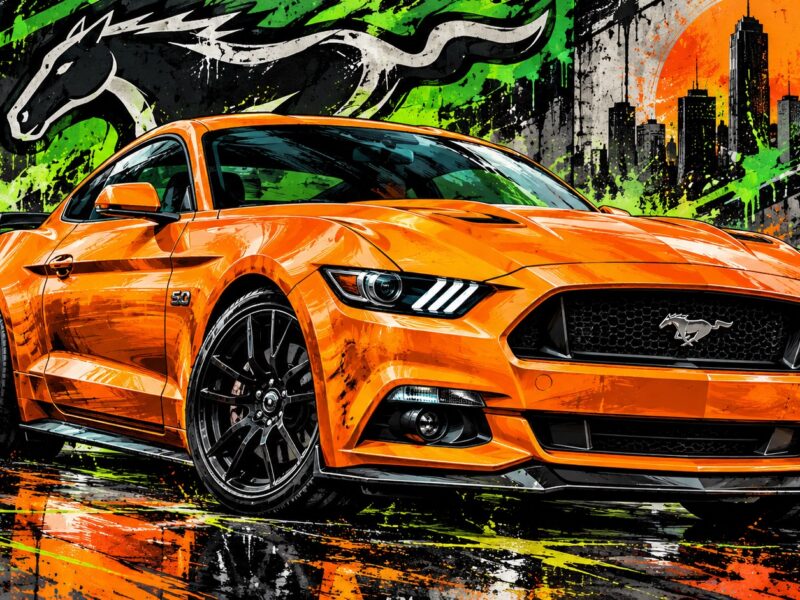
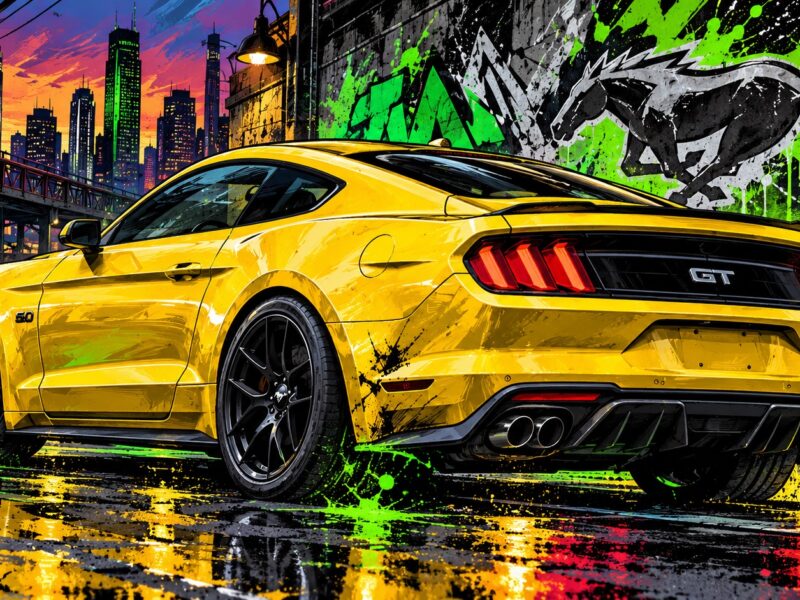
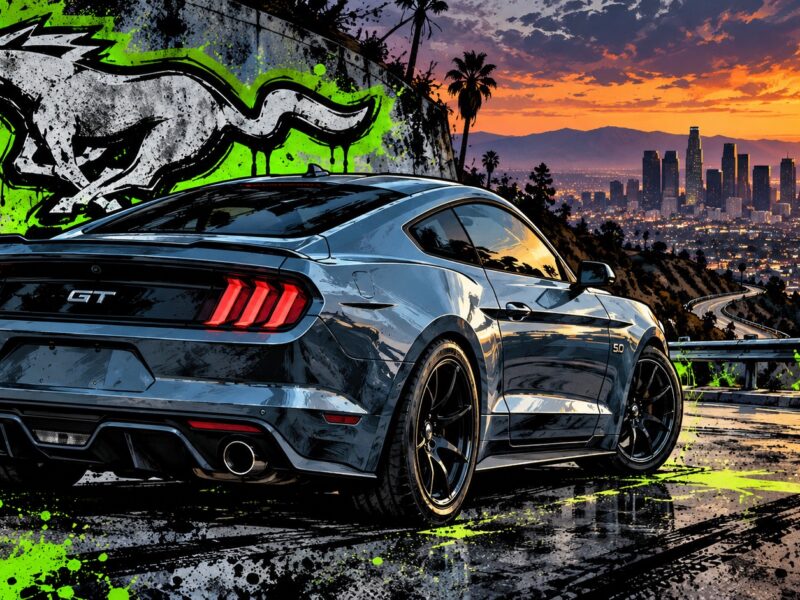
IMAGES NOTE: The graffiti-style vehicle images are AI-generated illustrations created for this Parking Spot. They do not represent specific vehicles currently offered for sale.