
What Market Data Can Tell Enthusiasts About Buying Smart
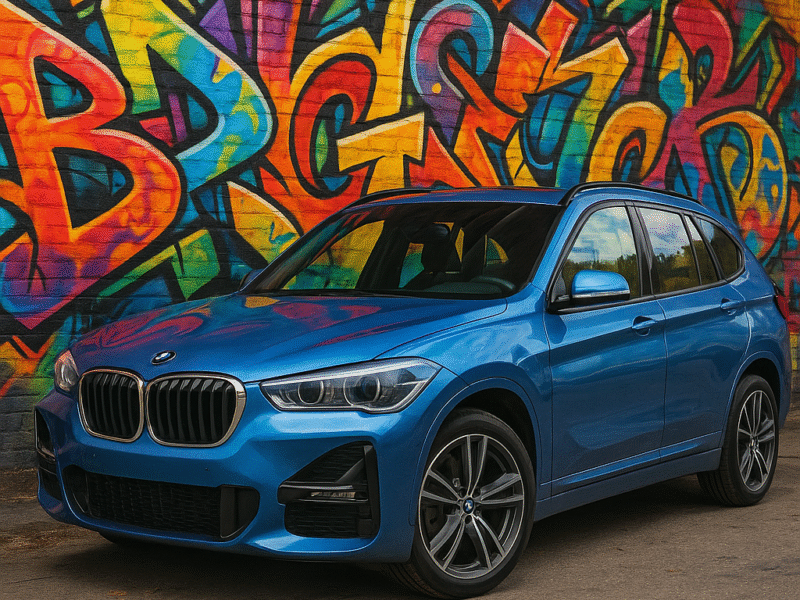
What If The “Expensive” Car Isn’t The Expensive Choice?
Here’s one of the stranger things about the used-car market:
Sometimes a performance car that originally cost dramatically more can depreciate into the same price range as an ordinary used crossover.
That doesn’t automatically make the performance car cheaper to own.
But it can create some very interesting buying opportunities for people who understand what they’re looking at.
I’ve spent more than 20 years around the car business, and one thing becomes obvious once you stop shopping strictly by badge, original MSRP, or what everybody else is buying:
Depreciation doesn’t hit every vehicle the same way.
And sometimes the vehicle everybody thinks is the “smart” choice is actually the one everybody is fighting over.
THE CAR EVERYBODY WANTS CAN BE THE WORST DEAL
Think about the usual suspects:
- Toyota RAV4
- Honda CR-V
- Subaru Outback
- Kia Sportage
- Hyundai Tucson
They have huge mainstream demand.
People trust them.
Dealers want them.
Banks understand them.
Consumers search for them.
And because everybody knows they’re desirable?
Everybody bids on them.
That demand helps them hold their value.
Which sounds wonderful if you already own one.
It can be considerably less wonderful when you’re trying to buy one.
The “safe” car can become expensive simply because everybody else wants the same safe car.
Meanwhile, something with considerably more performance, personality and original MSRP can be sitting in another lane of the market with far fewer buyers fighting over it.
THE DEALER WHO THOUGHT TOYOTA WAS THE ENTIRE CAR BUSINESS
I have a friend who owns a dealership in Colorado, and that guy buys Toyotas.
Lots of Toyotas.
He’s not normally the guy walking around thinking:
“You know what I need on my lot? A Porsche.”
Then a Porsche Cayman came into his world.
He bought it, flipped it, and made about $3,500 in gross profit.
The next thing you know, he was buying another Porsche and putting it into inventory — almost like he had suddenly discovered there was another brand in the marketplace besides Toyota.
That’s how buyer psychology works.
Sometimes people aren’t avoiding a vehicle because the numbers don’t work.
They’re avoiding it because they’ve already decided — before looking at the numbers — that it belongs in somebody else’s world.
Dealer psychology works the same way.
If ten dealers want the same RAV4 and only two are comfortable buying the BMW, Porsche, AMG or Audi?
Guess which car can sometimes have more room left in it?
THERE ARE REALLY TWO CAR WORLDS
I’ve always looked at the market as two different universes.
WORLD #1 — THE APPLIANCE UNIVERSE
These buyers want:
- predictable
- reliable
- low-stress
- “just get me there” transportation
Nothing wrong with that.
Some people want a car to operate like a refrigerator.
Turn it on.
Use it.
Don’t think about it.
WORLD #2 — THE PERFORMANCE UNIVERSE
This is where you find things like:
- BMW X1 and 3 Series
- Mustang GT
- Porsche Macan
- Dodge Challenger
- C7 Corvette
- Audi S4
- Subaru WRX
- BMW 530i
- AMG anything
- M anything
- and plenty of other cars built for people who actually enjoy driving
This isn’t Europe vs. Japan.
It isn’t luxury vs. economy.
It’s intent.
Cars built to do something instead of simply go somewhere.
FEAR CAN CREATE THE DISCOUNT
Why do some of these cars depreciate so much harder?
Because buyers are afraid of:
- maintenance costs;
- European repair bills;
- performance-car complexity;
- higher mileage;
- turbochargers;
- air suspension;
- electronics;
- or simply owning something outside the safe mainstream.
And on the right vehicle, that fear can mean 40–60% off the original price in just a few years.
That’s how a BMW that originally cost dramatically more can eventually land in the same general price range as somebody else’s used Honda crossover.
Fear can create opportunity.
Of course, fear can also save you from buying a money pit.
That’s why you still have to know what you’re buying.
Maintenance matters.
History matters.
Condition matters.
Mileage matters.
Previous owners matter.
But simply saying:
“I would never buy that because BMWs are expensive to fix.”
isn’t market analysis.
That’s fear doing the shopping.
BMW X1 vs. HONDA CR-V?
That sounds like a ridiculous comparison.
And that’s partly the point.
When I originally wrote about this, I looked at actual Denver-area listings and dealer data for 2021–2022 models.
The numbers looked roughly like this:
2021–2022 BMW X1 xDrive28i
- Used Price: roughly $24,500–$29,000
- Original MSRP: roughly $42,000–$47,000
- Horsepower: 228 hp
- Torque: 258 lb-ft
- 0–60: roughly 6.3 seconds
- AWD available
2021–2022 Honda CR-V EX / EX-L
- Used Price: roughly $28,000–$32,000
- Original MSRP: roughly $31,000–$36,000
- Horsepower: 190 hp
- Torque: 179 lb-ft
- 0–60: roughly 7.8 seconds
Look at the weird part.
The BMW originally cost considerably more.
Yet depreciation had pushed examples into the same general pile of money — sometimes even below the Honda.
Why?
Because the Honda had exactly what the mainstream market wanted:
perceived safety.
The BMW had exactly what part of the mainstream market feared:
depreciation, complexity and the possibility of European repair bills.
Same general pile of money.
Completely different cars.
AND YES — THE BMW CAN COST MORE TO FIX
I’m not pretending otherwise.
A BMW, Porsche, Mercedes or Audi can absolutely hand you a repair bill that makes you wonder why you didn’t buy the refrigerator.
But here’s the other side people conveniently forget:
Everything breaks.
- Toyota hybrid batteries fail.
- Honda turbos fail.
- Subarus have their own expensive problems.
- Mustang transmissions break.
- Corvette electronics aren’t angels.
- Even the supposedly boring transportation eventually needs brakes, tires, suspension, cooling-system work and repairs.
A mechanic doesn’t fix your Honda for free because you made the responsible choice.
So my attitude has generally been:
If I’m going to spend money driving something, I’d rather enjoy the thing I’m driving.
That’s not the right answer for everybody.
It’s the right answer for me.
THE LEASE CYCLE IS WHERE THINGS GET REALLY INTERESTING
Luxury and performance vehicles are frequently leased.
The lease buyer says:
“I want something new. I want the warranty. And in three years I want another one.”
Fine with me.
Because that means somebody else is absorbing the first few years of depreciation.
Then those cars start coming back.
BMWs.
Mercedes.
Audis.
Porsches.
EVs.
Performance models.
Suddenly the used market gets another wave of inventory.
And every time supply starts outrunning the number of people willing to buy that particular vehicle?
Prices move.
That’s the game.
Not magic.
Supply and demand.
Buyer psychology.
Lease-return timing.
Dealer inventory pressure.
Fear.
If everybody wants the RAV4 and half the room is afraid of the BMW?
I’m at least going to look at the BMW.
THAT DOESN’T MEAN “BUY THE CHEAPEST PERFORMANCE CAR YOU CAN FIND”
That would be stupid.
A cheap German performance car with no maintenance history and three dashboard lights glowing like a Christmas tree can turn into a very expensive education.
The point is not:
“Performance cars are cheap.”
The point is:
The market does not always price cars according to how interesting they are.
Sometimes popularity keeps ordinary vehicles expensive.
Sometimes fear beats the price out of extraordinary ones.
And sometimes the person willing to understand the difference finds the opportunity everybody else ignored.
THE BOTTOM LINE
I prefer this side of the car world:
- Porsche
- BMW
- Mercedes
- Audi
- Mustang
- Corvette
- WRX
And anything else that makes me grin.
Not because every one of those cars is automatically a better financial decision.
Because I understand that purchase price and original MSRP are not the same thing.
And I’d rather study the market, understand the risk and drive something interesting than automatically buy whatever everybody else has already decided is “safe.”
Same money can buy two completely different experiences.
Choose your universe.
Want To Go Even Deeper?
I originally wrote a much longer article about this idea — including lease cycles, depreciation waves, dealer psychology, Ford and Jaguar, Tesla, and the two completely different worlds of performance buyers and commuters.
You do not need to read it to understand this Parking Spot.
But if you want the longer version:
👉 READ THE FULL ARTICLE AT THECOOLCARGUY.COM
HERE’S THE PART I FIND KIND OF COMICAL
I created this Parking Spot because I wanted to.
That’s really the whole idea.
I’ve been The Cool Car Guy for more than 20 years. I’ve sold more than $50 million in vehicles over the years without carrying a bunch of inventory myself, and I’ve spent decades building this brand around everything cool-car-related.
Now I use CoolCarGuy.com to promote my own stories, opinions, cars, experiences and whatever else I think belongs here.
And these Parking Spots keep surprising me.
I’ve created pages that have collected hundreds of views over time. Some have crossed 1,000 views. I’ve watched individual Parking Spots keep getting discovered without me continually paying Facebook, X, Google or somebody else to keep feeding an advertising meter.
Does that mean your Parking Spot is guaranteed to get hundreds or thousands of views?
No.
It means I built a website I actually use myself, and I like what these pages can do.
They get their own URL.
I can share them wherever I want.
I can come back and improve them.
And they give whatever I’m talking about a place to live outside somebody else’s social-media feed.
Now here’s the funny part:
I’M LETTING YOU INTO THAT SAME WORLD FOR $7.
Seven bucks. One time.
You can create your own Parking Spot around a car you own, something you spotted, an automotive opinion, a business, a product, a YouTube video, a road trip, a restoration, or just something around cool cars that you think is worth talking about.
You could have created this page.
And if you want to take it one step further, you can join the affiliate program for free and potentially earn commissions by introducing other people to CoolCarGuy.com.
Why am I offering this for $7 after spending decades building the brand?
Because I think it’s a cool idea.
That’s pretty much it.
I use it.
You can use it.
And seven bucks is ridiculous enough that I still find the whole thing funny.
Build the page. Grab the URL. Start sharing it.
👉 CREATE A $7 PARKING SPOT
👉 JOIN THE AFFILIATE PROGRAM FREE
— The Cool Car Guy